RSS
 

Archive for the ‘Science’ Category

Complex information put to music

15 Feb

Since your first day of kindergarten when you sang your “ABC’s” educators have used music to teach the otherwise boring lists, numbers, patterns and history of our world and universe.  I don’t know if it is actually easier to memorize when put to music or simply more rewarding so you try harder – after all, it is very impressive to name all 192 odd countries in the world in 60 seconds to the tune of the Mexican Hat Dance (see number 5).

#1 The periodic table

I would love to be able to memorize this song, but even I’m not that big of a geek.


#2 The Pi Song

This could have been horrible if it was not sung so well. This is another song I have little interest in actually learning but its always fun to know PI to at least 10 places…just incase.  

#3 The Universe Song – Monty Python

I really love this song and sing it all time to remember how big the universe really is. This version is sang by Clint Black (I am from Texas you know, plus the original lacks such quality visuals).


#4 The Universe…Again

A catchy tune and inspiring version, but since it lacks the numeric information of the Monty Python version it will always live in its shadow.


#5 The Nations of the World

This is one of my favorites. I have the first 2 sections memorized, but I loose it when he gets to Africa. Unfortunately, like most of these songs the information is increasingly out of date. 


#6 I am the very model of a modern major-general

While not necessarily conveying a lot of scientific or practical information (that’s kind of the point of the joke), this famous scene for the play the “Pirates of Penzance” does have a lot of historical perspective on what he nerds of the 19th century where talking about. From a time when things like “beings animalcules” (microscopic organisms) were first discovered. The late great science fiction author Isaac Asimov wrote an essay about this song where he identified the meaning behind every strange and forgotten word. If you’re into retro steam punk, you’ll enjoy this vocabulary lesson.


I am the very model of a modern Major-General,
I’ve information vegetable, animal, and mineral,
I know the kings of England, and I quote the fights historical
From Marathon to Waterloo, in order categorical;
I’m very well acquainted, too, with matters mathematical,
I understand equations, both the simple and quadratical,
About binomial theorem I’m teeming with a lot o’ news,
With many cheerful facts about the square of the hypotenuse

The rest is here: Major General’s Song

#7 Parts of the Brain

#8 All the words in the English Language

A parody of this type of song sang by the animated team that gave so much to this genre.

#9 The 50 US states and their capitols

I’m pretty sure kids use this song in school today to learn the states.


#10 US Presidents from Washington to Clinton


#11 We didn’t start the fire

Billy Joel rattles through the incredents of live in the 20th century.

#12 Natural Decay

#13 How a bill becomes law – school house

A public service announcment that interrupted every cartoon marathon of my 1980′s youth.


#14 Sink the Bismarck

Learn some WW2 history.

#15 The Battle of New Orleans

Get pumped up about the War of 1812 – USA v Britan part 2, the sequel to the revolution.


Einstein never said that…

30 Nov

Einstein quoteI was testing BlogJet today as a possible desktop blogging tool. Strangely, what caught my eye first was not the tool, but the quote, attributed to Albert Einstein, that they used in the sample post… I found it a little hard to believe that Einstein who died in 1955 would have a quote about computers…especially about computers being fast. Here is the quote:

“Computers are incredibly fast, accurate and stupid; humans are incredibly slow, inaccurate and brilliant; together they are powerful beyond imagination.” — Albert Einstein (or was it Leo Cherne?…read on)

Read the rest of this entry »


Where is the bear in the big dipper?

28 Oct

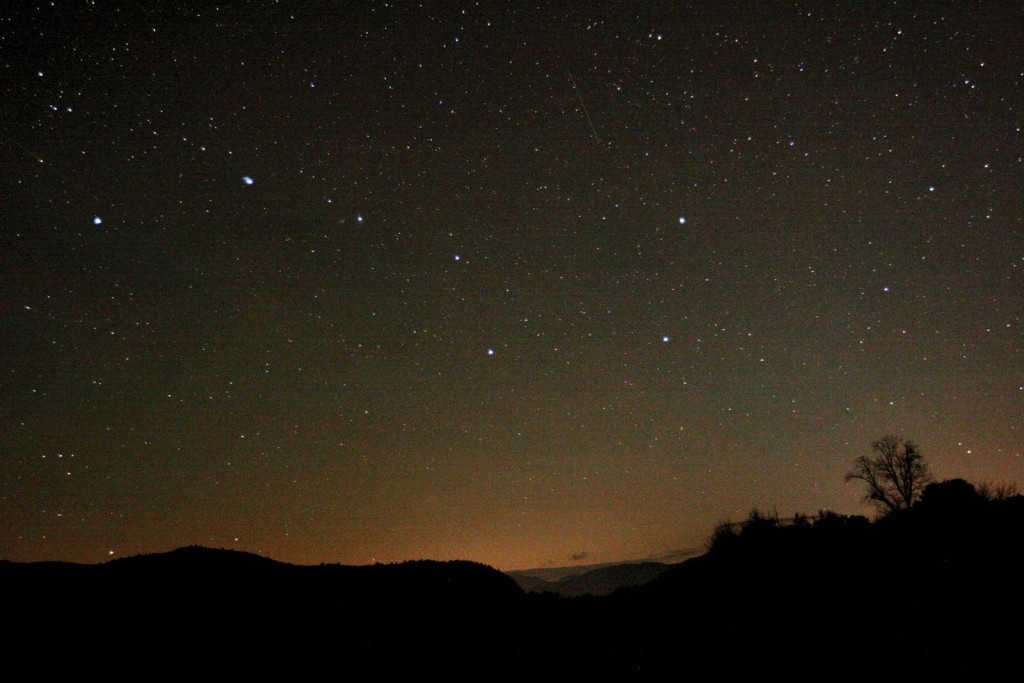
On the mantle of my bed I have a planetarium (Sega HomeStar) that projects the night sky onto my ceiling. Every other night or so, I turn this on when I’m relaxing into sleep. It allows me to star up at the stars, forget about the day, and contemplate the vast, unending beauty of the universe we live in. It is hard to look at the sky without your brain searching it for patterns (after all the brain is a pattern finding machine). The brain cannot help but try to connect the dots in a futile search for meaning and familiar shapes. Seven of the brightest stars in the northern hemisphere form what we call Ursa-Major – Latin for “The big bear”. I for one, and most people I know never can see any bear shape at all in those stars, so we call it The Big Dipper instead.

We can’t see the bear for 2 reasons –

  • First, there are actually 20 stars that make up the bear, and the “big dipper” is just his rump and tail – that’s right I said “tail”.
  • Second, bears don’t have tails.

Why does this bear have a tail?
According the the Greeks, Zeus, the king of Greek gods, flung this bear into the heavens by its tail, stretching the tail into the shape it has now. Was this story compelling enough that Greeks, Roman’s, and all of Europe and generations of artists would see a bear? Apparently it was:


Artists have been drawing this “bear with a tail” for centuries.

Interestingly, many American Indian tribes who never heard the Greek story, also knew these seven stars as part of a large bear. They saw the three stars of the Dipper’s handle not as a tail, but as three boys chasing a bear. A much better story if you ask me.

To see how other cultures saw these stars, check out this nice site.

I think this image shows it best:


World’s Largest Fire Extinguisher

08 Jul


This is not a Photoshop. It was taken on the 4th of July by Spencer Weiner of the LA Times, showing a firefighting airtanker dropping fire retardant on wildfires in southern California.

[The Big Picture; Wikipedia]


It’s news like this that make me doubt the government

28 Jun

In order to survey the impact of massive solar power plants on the environment and wildlife, the federal government is freezing new solar projects on public land for two years! Buying private land is way more expensive for startups than leasing public land.

Don’t get me wrong, I do believe the Bush administration has demonstrated more than its share of incompetence. But they semm to have no problem dismissing environmental concerns when it comes to allowing the drilling of oil on public lands, but when it comes to letting the green competetion use that land for solar farms they impose a 2 year freeze to study the problem! Give me a break. This is more than incompetance, this smells like corruption. As a citizen and taxpayer, my vote counts for 1/300 millionth of the US public lands (which I think in this case is mostly desert right? where the sun is always shining.) I say, let them use the land. In fact, let them use it for free and get tax deductions. All of which will help to make this profitable and my energy bill lower and my air cleaner. (Read the story on the NYT)


Louisiana passes first antievolution “academic freedom” law

27 Jun

Louisiana Governor Bobby Jindal has signed the Louisiana Science Education Act into law, singling out evolution, origins of life, and global warming for criticism. Let 1,000 Dover trials bloom!

Read More…


Disney’s new short Glago’s Guest

24 Jun

My first official reason to want to see this new Bolt movie.


Nice photo of a jelly fish [Things I don't want to meet in the ocean]

24 Jun

Pedazo de medusa!!! (4 fotos) 3

via http://ziza.es/2008/05/15/7.html


Homer’s Odyssey Said to Document 3,200-Year-Old Eclipse [News]

23 Jun

Researchers say that references to planets and constellations in the Odyssey describe a solar eclipse that occurred in 1178 B.C., nearly three centuries before Homer is believed to have written the story. If correct, the finding would suggest that the ancient poet had a surprisingly detailed knowledge of astronomy.

The Odyssey, commonly dated to near 800 B.C., describes the 10-year voyage of the Greek general Odysseus to his home on the island of Ithaca after the fall of Troy in approximately 1200 B.C. Toward the end of the story, a seer named Theoclymenus prophecies the death of a group of suitors competing for the affection of Penelope, the wife of Odysseus, who is believed to be dead. Theoclymenus delivers his prophecy as the suitors are sitting down for their noontime meal. He foresees them entering Hades and ends his speech with the statement, “The Sun has been obliterated from the sky, and an unlucky darkness invades the world.” Odysseus dispatches the suitors not long thereafter.

[More]


Justification of Ockham’s Razor as a principle of reasoning

06 May

Scientists use the principle of Ockham’s Razor as their guide. Ockham’s Razor states that when there are multiple consistent theories are being considered, the choice should be the simplest one. Simple theories have an intuitive appeal, but that is not a justification of Ockham’s Razor as a principle of reasoning. A justification should demonstrate that preferring the simplest compatible theory is better at finding the truth than any other competing strategy.

This article does a good job with great cartoons of explaining why this principle is valid. Very insightful. Here’s the link.

Update: here is an animated older version. The link above goes to the version 2 story board which has not been animated.